

Sarah is an experienced health, fitness, nutrition and beauty writer who previously worked as Health Editor at Good Food. She’s passionate about all aspects of health and wellbeing, from trying out new exercise and mindfulness trends to discovering delicious new recipes to share with readers.
Anyone who’s tried booking a last-minute session at a beloved local lido recently will have got the message loud and clear – al fresco swimming is back, and booming. And with clear water, fresh air, and sunny skies on offer, it’s not difficult to understand the appeal that outdoor swimming holds for so many.
In recent research by The Outdoor Swimming Society, most participants simply stated “joy” as being their main draw to the water, with 94% reporting lower levels of stress and increased feelings of happiness after an outdoor dip. 68% said they swam to improve their physical fitness, while 62% felt that outdoor swimming made them feel braver or more stoic. Other benefits cited included socialising (68%), a spiritual connection with nature and the self (55%) and a sense of adventure (55%) (1).
Of course, for the more adventurous (and confident) swimmers among us, lakes, rivers, and seas offer an exhilarating location to make a splash – and all with no pre-booking required. So why are al fresco dips having a comeback, what makes outdoor swimming such great exercise, and how can you get started this summer?
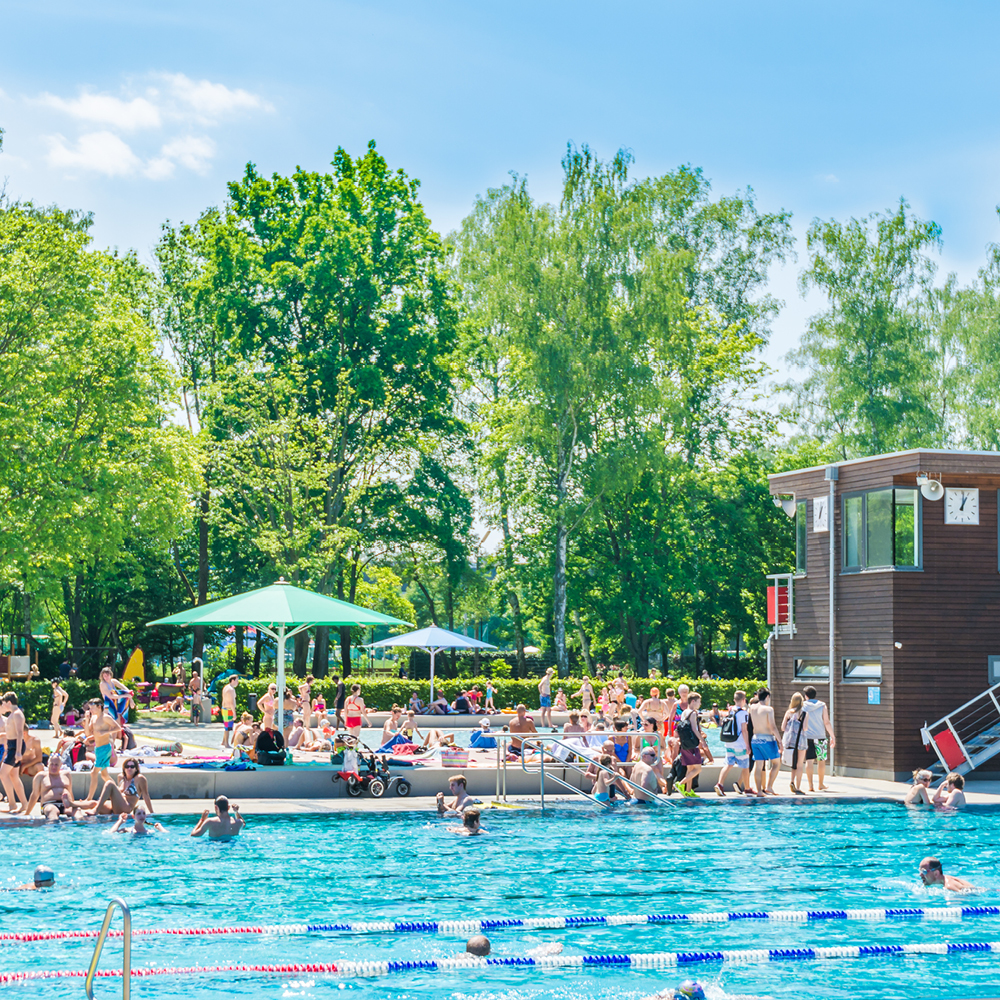
What’s behind the recent boom?
While people have obviously been swimming in the great outdoors since long before indoor pools were invented, recent years have seen a rise in the number of people, and women in particular, seeking out the experience. In 2021, Outdoor Swimmer reported that participation in outdoor swimming had tripled over the past two years, with women now making up the majority, at 65%, compared to the previously equal split of men and women in 2017 (2).
So, why are more people taking the plunge? The pandemic nudged swimmers outdoors – and many never looked back. Plus, rising energy costs and pool closures have only deepened interest in lidos and wild swim spots across the country.
“There has been a steady increase in interest for the past twenty years,” says outdoor swimming expert, Ella Foote, “but the pandemic years gave outdoor swimming a big boost. People started paying more attention to the beautiful natural spaces outside their front doors – and once they experienced the joy of outdoor swimming, many never looked back.”
Another factor that’s driving the rise? The need to escape from the urban environment and our screen-saturated lives, combined with a strong desire to reconnect with nature. Outdoor dips offer an immersive experience that takes us out of the drudgery of day-to-day life and provides a sense of relaxation, adventure, and awe – feelings that many find they are missing out on in modern life. “In these turbulent times, it’s a form of escape that grounds you in the present,” Ella says. “It reminds you of the beauty that’s still around.”
Finally, many of those who have dipped their toes into outdoor swimming keep coming back for the social aspect. Outdoor swimming groups and communities are easy to find, and are a great way to make friends in your local area while building up your confidence in the great outdoors.
Why water works wonders
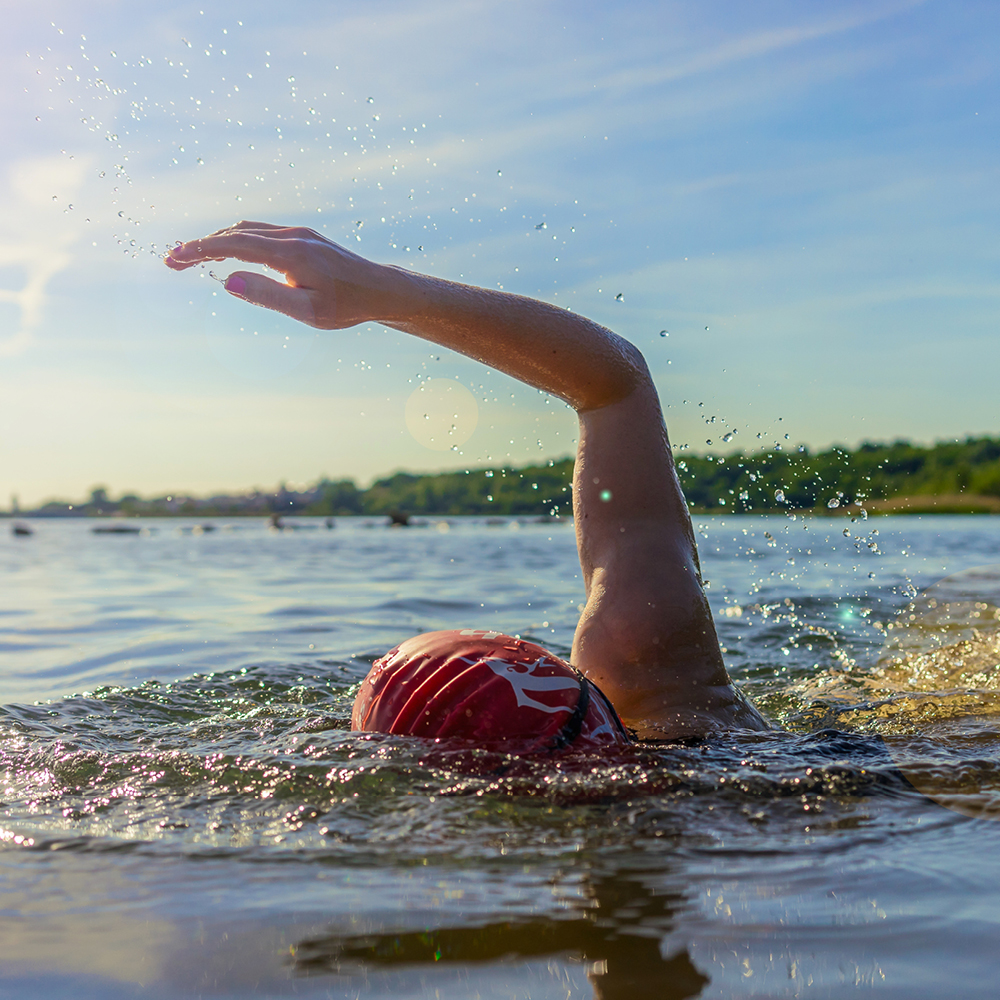
- Low-impact, high-benefit – Swimming is gentle on your body, providing a good workout without the intense impact that running or other high-impact sports can have on your joints. Practised carefully and with supervision, swimming is particularly well-suited to those recovering from injuries or managing chronic conditions like arthritis, joint pain, or back issues.
Even short, gentle sessions in the water can help build strength and endurance, without overloading the body – which is especially important if you’re rebuilding fitness or just starting out. And for those recovering from injuries, lidos with lifeguards offer a safe and supportive space to build confidence, with help on hand if you need it. - Full-body strength & toning – During swimming, your entire body works against the resistance of the water, helping to strengthen your arms, core, back and legs. It’s also a great way to improve posture and flexibility over time. The best part? You can adjust the intensity to suit your needs – from a gentle float and paddle to an energetic, heart-pumping workout. That makes it ideal whether you’re just getting started with fitness or looking to cross-train alongside other activities.
- Calorie burn & weight loss
– Outdoor swimming can be a brilliant way to burn calories and support weight management. Because it engages the whole body and requires constant effort, swimming uses a surprising amount of energy – even when it doesn’t feel like a tough workout.
The number of calories burned will depend on your stroke, pace, body weight and the water temperature, but on average, a gentle swim can burn around 150-200 calories in 30 minutes, while a more vigorous session can torch more. Plus, swimming helps build lean muscle mass – and the more muscle you have, the more calories you burn at rest.
And because it doesn’t always feel like traditional exercise – especially when you’re outdoors surrounded by trees, birdsong, or the open sky – it’s easier to stick with, helping to create long-term healthy habits without the dread factor. - Mood & mental wellbeing – Studies show swimming – especially outdoors – significantly boosts mood and reduces stress levels. The rhythmic motion, fresh air and natural surroundings provide a meditative escape, promoting feelings of calm and well-being.
Many outdoor swimmers report a noticeable mental lift after a dip – and there’s some science behind it. Cold water immersion is thought to trigger the release of endorphins (feel-good hormones), as well as boosting dopamine levels, which are linked to improved mood (3).
“You have to breathe in a measured way, which forces you into your body and into the present,” explains Ella. “With wild swimming, you often can think of nothing but the elements you are faced with – wind, rain, weeds, cold water – thoughts of work or relationships are gone!”
Over time, regular dips can build mental resilience and increase your ability to cope with stress – something that many outdoor swimmers say becomes just as valuable as the physical benefits. In fact, many turn to the water for its grounding effect – a chance to reconnect with themselves and switch off from everyday worries. “Swimming is quite a meditative movement,” Ella says. “The rhythm helps our minds sort through their mental mess. If I’m caught in a problem, I can often find the answer after a swim.”
And let’s not forget sleep. Like all exercise, swimming can help improve sleep quality and duration – but many find the combination of physical exertion, fresh air and nature especially helpful (4).
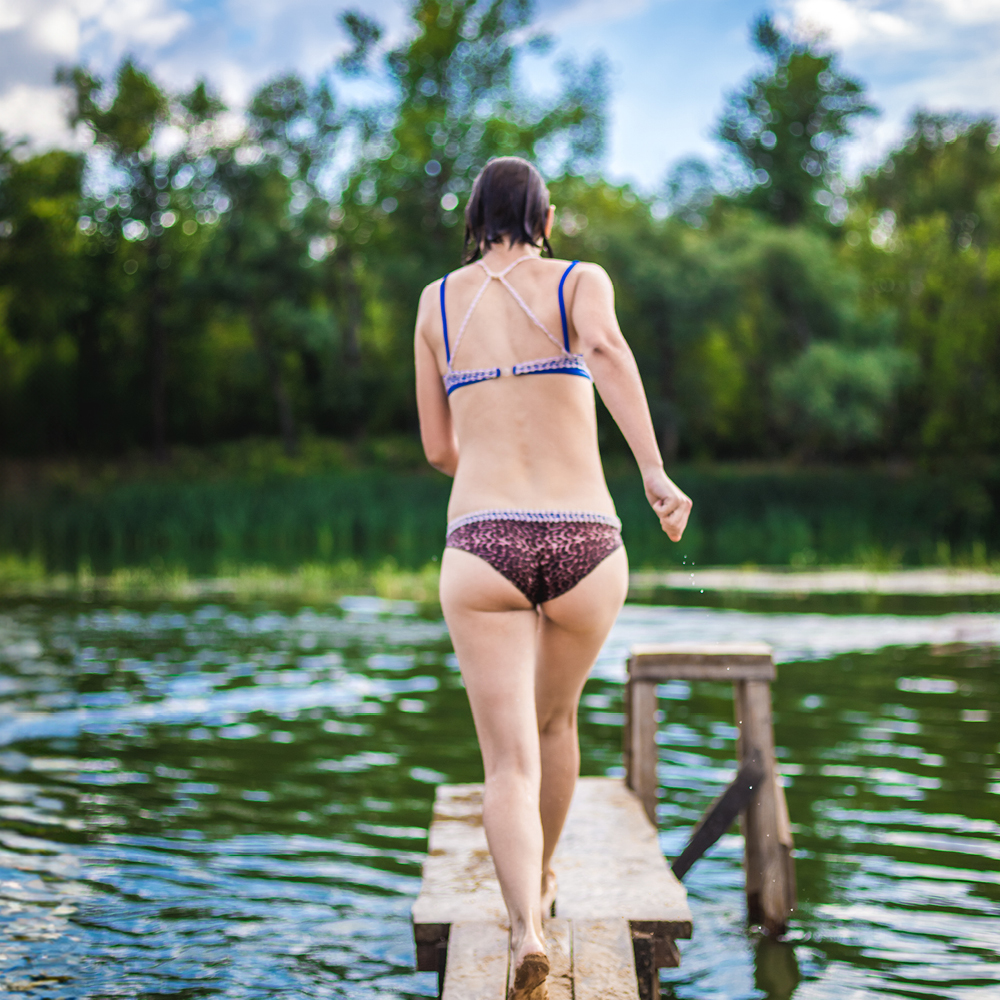
Book swimming lessons if you’re not confident
Think they don’t exist for adults? Think again! Whether you’re learning for the first time or brushing up your technique, adult lessons are widely available, and a great way to build up confidence. Most leisure centres offer group or one-to-one sessions to suit your pace. It’s never too late to dive in – and you might be surprised how fun it is.
Invest in some comfortable kit
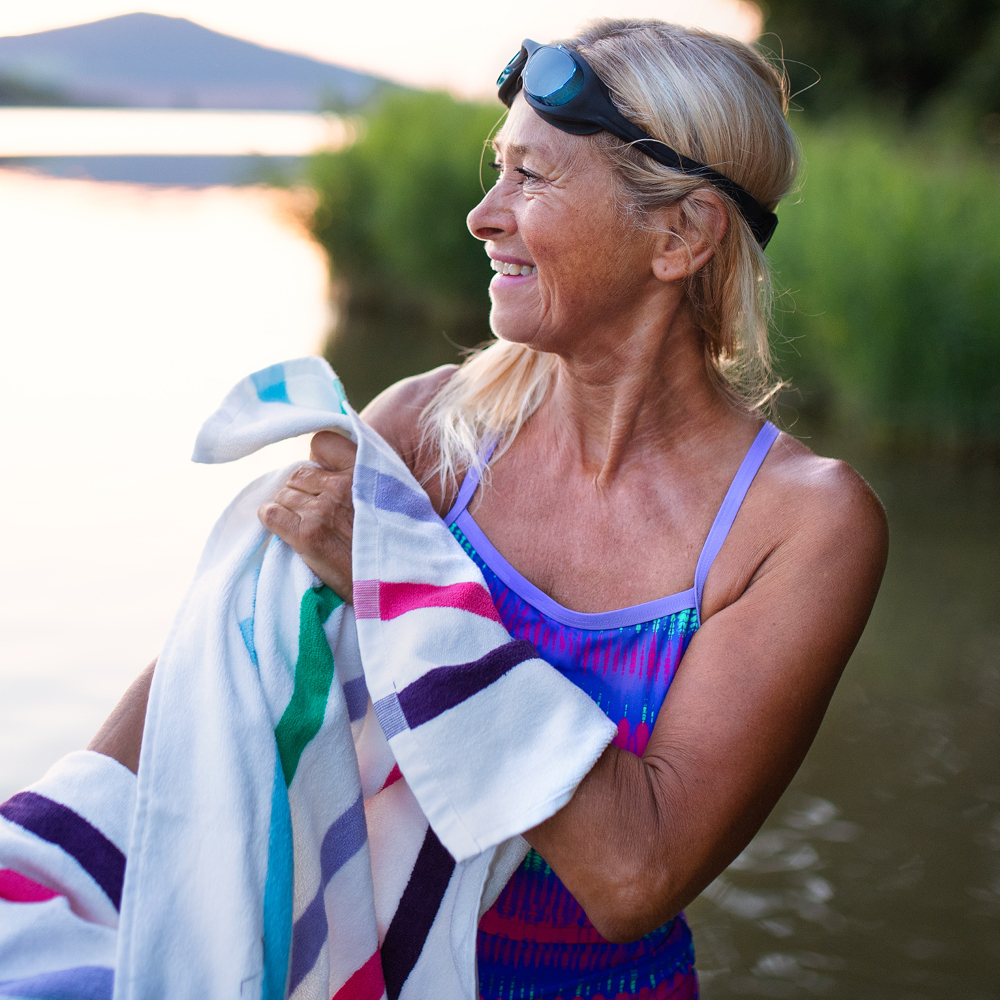
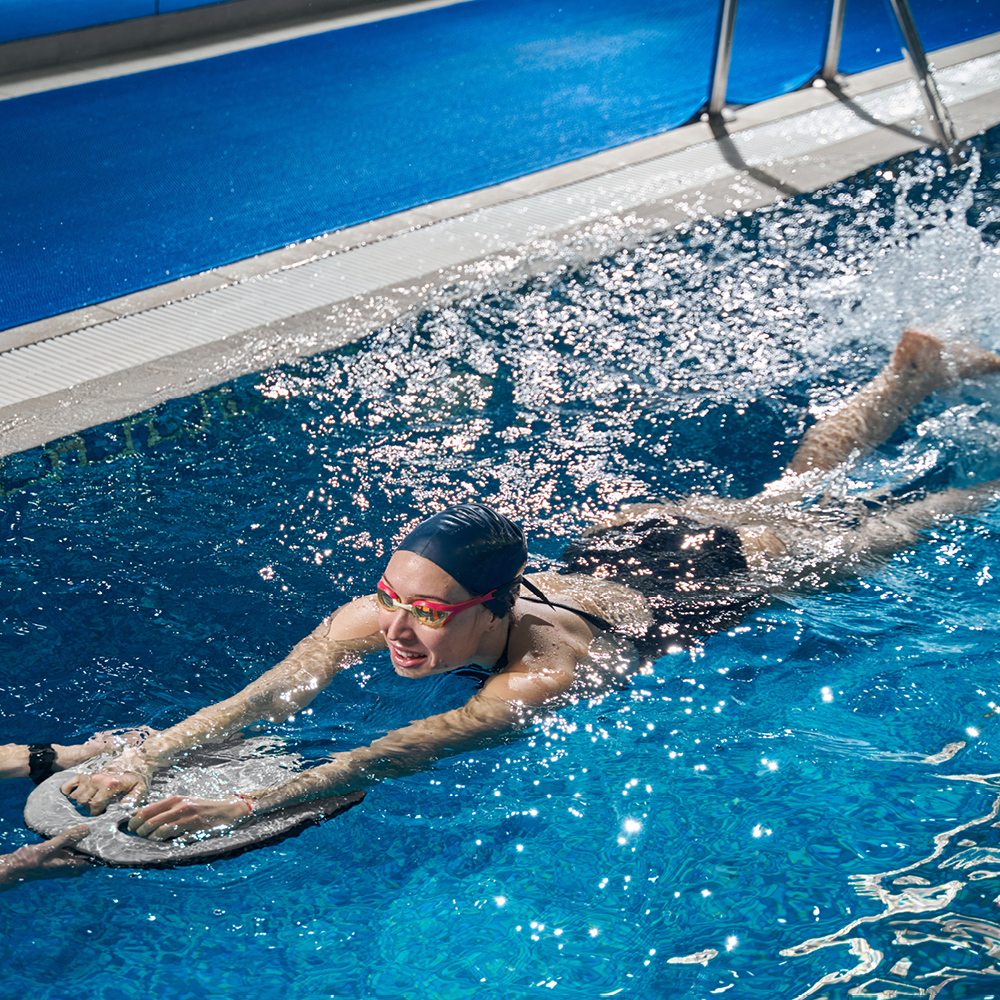
Swimming is refreshingly low-maintenance compared to many sports. “You only really need a swimsuit and towel,” says Ella, “but goggles can make a big difference. A bright swim cap and tow float help you stay visible, and something on your feet can protect them from sharp stones or slippery spots. And even in summer, pack warm layers for afterwards.” For open water swimming, you might also consider earplugs (to help prevent swimmer’s ear), a microfibre towel, and a waterproof bag for your gear. In colder conditions, neoprene gloves, socks or water shoes can help keep extremities warm and give you better grip underfoot.
Focus on the essential skills first
Ella agrees that safety and skill-building come first: “Ask yourself – how comfortable are you out of your depth? Can you swim for 25 metres without stopping? Can you tread water or float on your back? These basic skills could save your life, so if you are unsure, focus on these first.”
Try swimming with friends or join a group
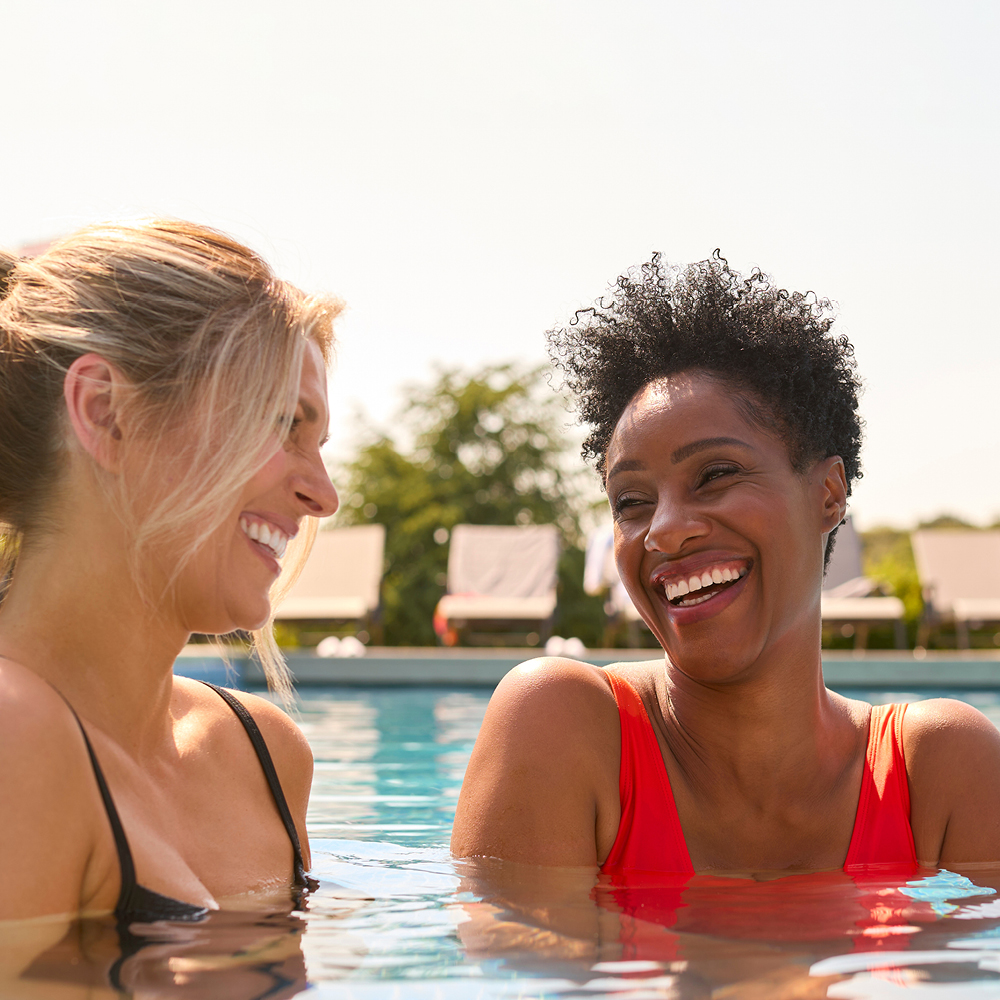
Swimming solo can be a calming, mindful experience – but if you’re new to outdoor swimming, having company can boost both confidence and safety. Look for local swim groups in your area (Facebook, forums, and community notice boards are great places to start). Many groups welcome beginners and offer social swims, safety tips, and plenty of encouragement. You’ll likely find that chatting before and after a swim becomes just as enjoyable as the swim itself – and having a swim buddy makes it much easier to stay motivated.
Use fitness trackers or apps
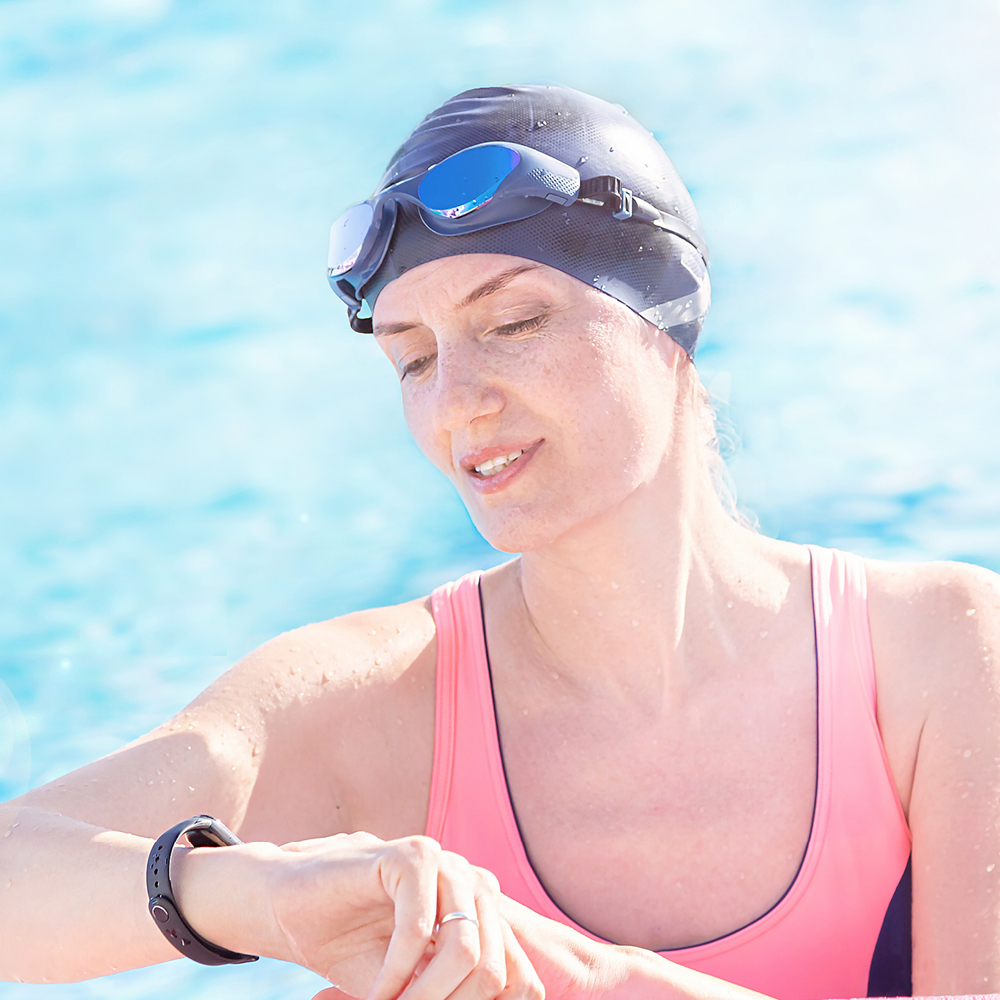
Tracking your swims can be a great way to stay motivated, especially as you start to notice improvements in stamina, technique or confidence. Many smartwatches and waterproof fitness trackers can log your swim distance, pace and heart rate – and some can even record open water routes using GPS. If you’re using the Nutracheck app, you can sync your fitness tracker to log calories burned from your swim sessions automatically. Watching your progress build week-by-week can be just the push you need to keep going.
Stay safe while you swim
Outdoor swimming is exhilarating and joyful, but safety is key. A few basic precautions can boost confidence and lower risks.
- Know your limits – and respect them. – It might sound obvious, but it’s the golden rule. Don’t swim further, faster or longer than feels right, especially in cold or unfamiliar water. Tiredness hits quicker outdoors, so listen to your body and get out while you’re still feeling good.
- Check the conditions. – adds Ella. “It might feel warm in the shallows, but it can be much colder at the bottom. That sudden temperature shift can cause cold water shock – so take it slow, and ease in gradually.”
- Stick to known swim spots, lidos, lifeguarded areas or established locations, – especially when you’re starting out. “If you’re visiting the coast, find a lifeguarded beach,” Ella says. “If you choose something more remote or quieter, remember that the weather is more changeable in coastal areas, and wind can make a huge difference to how the sea behaves. Check the tide times and for any known offshore currents. As a rule, avoid reservoirs and quarries, which are often private and not designed for swimming. However, lakes in national parks across the UK are wonderful.”
- If you’re swimming in open water, always let someone know where you’re going – and when you expect to return. Better yet, bring a buddy or join a local group – it’s safer, and more fun too.
- Stay warm afterwards. – Getting cold after a swim can happen surprisingly fast, even in summer. Pack warm layers, a hat, and a hot drink for afterwards – and change quickly out of your wet swimsuit. A big changing robe or dry robe can make all the difference on cooler days.
TAKE CARE
Outdoor swimming comes with risks, even for experienced swimmers. Always make sure that you carry out your own assessment of the area that you are swimming in. Check the weather and tides, exercise caution when swimming alone, and only ever swim when you’re feeling well. If you have any doubts about the safety of a location or your ability to complete a swim, it’s best not to take part.
Where can I find more information?
- The Outdoor Swimming Society (OSS) – Wild swim advice, safety tips and seasonal info – outdoorswimmingsociety.com.
- Wild Swimming UK – Find scenic spots nationwide wildswimming.co.uk.
- Bluetits Chill Swimmers – Inclusive, fun-focused swim community – thebluetits.co
- Local Facebook groups & community forums – Find local swim spots, new friends, and updates.
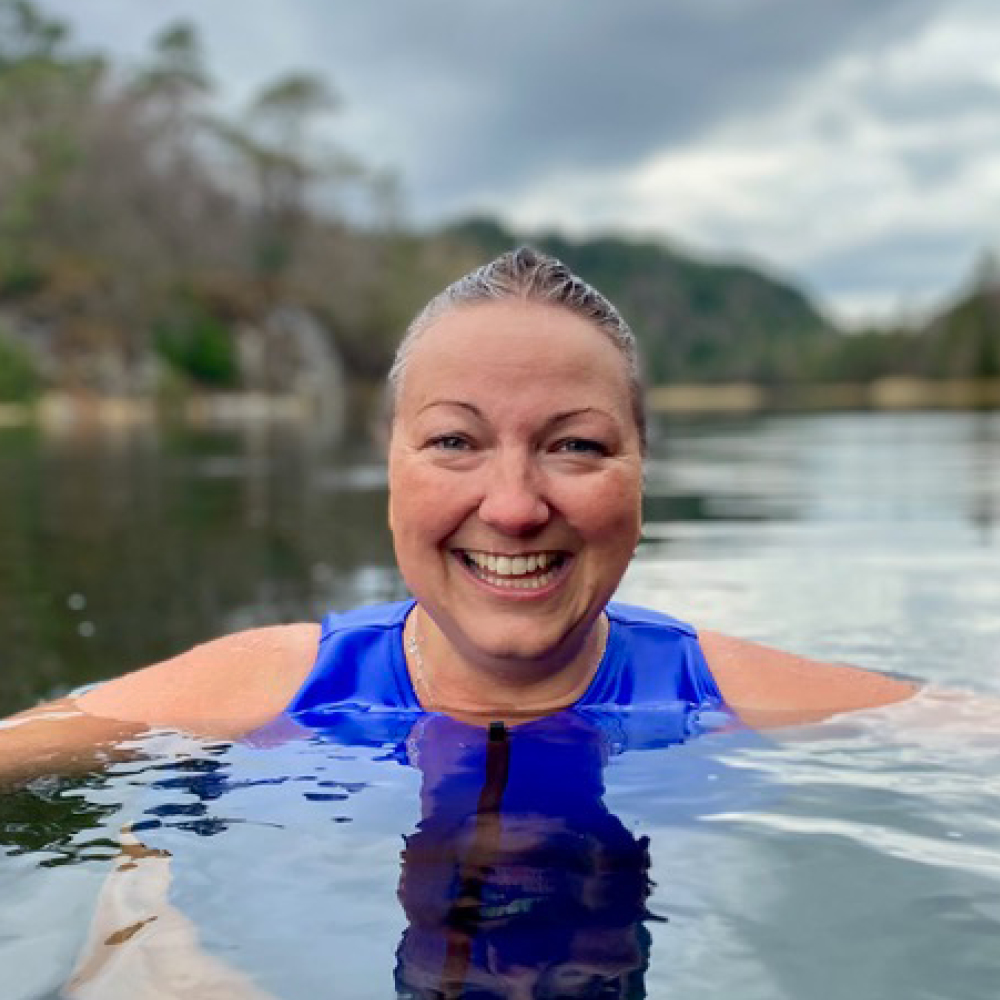
Ella Foote is Editor of Outdoor Swimmer magazine and Director of Dip Advisor, a swim guiding business. She’s an open water coach, RLSS lifeguard and author of How to Wild Swim. Ella regularly writes for national media and swims year-round in rivers, lakes and seas across the UK and beyond. Find out more at thedipadvisor.co.uk, or follow Ella on Instagram at @dip_advisor.